My Laos Archive


Lao children Vientiane 1969
Children pose outside the Buddhist temple, contented and curious, without toys and modern amusements.

Planting rice, Vientiane 1969
Lao women working hard to transfer rice seedlings to the paddy fields. Lao people prefer glutinous rice to any other variety.

Samlor Driver Vientiane 1969
A friendly samlor (3-wheeled cycle taxi) driver poses for a photo in the street

Boys At Mekong River, Vientiane 1969
A small market by the river where coconuts can be seen piled for market

Lao National Radio Vientiane 1969
My VSO posting was to work at Lao National Radio in Vientiane 1969-70. Note our two project Land Rovers – one a lorry – parked outside.

Radio station Vientiane 1969
This sign says in Lao that it is the National Radio of the Royal Kingdom of Laos. After 1975 under the communist government this sign was modified.

Aerial view Vientiane 1969
Lao National Radio adjacent to the National Stadium in the centre of Vientiane

Fresco Vientiane 1969
Decorative fresco on wall of Lao National Radio denotes the artistic culture that abounds.

Patchuban cover showing That Luang
The royal procession from Pha That Luang features in this cover photo.

New equipment demonstrated
This 2-page article shows the close working relationship between British engineers and Lao technicians

British engineers training staff at LNR
British aid workers were from BBC, and Marconi together with VSO volunteers
These photographs provide a remarkable point of comparison with my 2024 visit to Lao National Radio. Taken around 1969 and published in Patchuban (Now), they show British Project Manager Ramsbotham, engineer Ralph Williams, Chief Engineer Mai Souvannouvong, and their colleagues working together during a major modernization programme. Surrounded by racks of valve transmitters, test equipment and analogue control systems, they were building the technical foundations of a national broadcasting service. When I returned to Lao National Radio in 2024, the technology had changed beyond recognition. Digital systems, computers and satellite links had replaced the equipment seen in these photographs. Yet the station’s purpose remained unchanged: to inform, educate and connect the people of Laos. Looking across the fifty-five years between these images and my visit, the most striking continuity is the commitment of the engineers, technicians and broadcasters whose work has kept the voice of Laos on the air for successive generations.

Aviation lights atop LNR Vientiane 1969
View from the roof also shows crowds at sports event in national stadium next door.

LNR technicians in class Vientiane 1969
An evening class of the Lao technicians we taught at Lao Radio. Some of them went on to study in the UK.

LNR transmitter site technicians Vientiane 1969
Chris and other technicians working together at the foot of one of the antenna arrays

Control Room at LNR Vientiane 1969
At the technical centre of the Lao National Radio studios in Vientiane, Frank monitors link to Pakse and Luang Prabang stations

Fishing in Mekong, Vientiane 1969
The Mekong River is in flood and this woman takes the opportunity to fish in Lao style. Lao people love their fish, the small ones being dried and made into ‘pa dek’ a spicy fish paste to eat with their sticky rice.

Building levees Vientiane 1969
In August 1969 the Mekong was threatening to flood Vientiane as it was rising at an alarming rapid rate. Levees were built in haste.

Mekong vendor, Vientiane 1969
This vendor has a stall on the banks of the dried-up Mekong, selling tasty chicken roasted on her portable spit, together with fish sauce.

Siesta Time Vientiane 1969
The 3-wheeled pedal cycles (samlors) used to provide a vital taxi service in most towns, but it was hard work for the cyclists. It was therefore a welcome rest for them at midday.

Flooded Wattay airport Vientiane 1969
The International Airport is closed due to severe flooding as the Mekong spills its banks

Floods in Vientiane 1969
Lao people taking flooding in their stride and for this cafe it is business as usual, but watch the plank!

Women paddling boat in Vientiane street 1969
Lao people were quite unfazed by the floods and were quite adept with boats

Mekong Floods Imminent Vientiane 1969
In August 1969 the Mekong rose at an alarming rate and attracted much attention. Flood mark indicated 13m level

British Army Beaver in Pakse 1969
Known as the British embassy plane we used this often on trips to LNR radio stations in Luang Prabang and Pakse

Beaver cockpit before takeoff Vientiane 1969
This six-seater plane served us well on frequent trips. It was flown by British Army pilots based in Singapore

Bristol Freighter Vientiane 1969
This NZAF transport plane at Wattay Airport on a training flight was diverted to transport a 2-ton generator set to Luang Prabang for the Lao National Radio station.

T28 loaded with rockets Vientiane 1969
T28 trainer planes flown by Hmong pilots were in constant missions

Pouring water at Lao New Year Vientiane 1969
Pouring water down the back of guests at Lao New Year celebrations, happily at the hottest time of year!
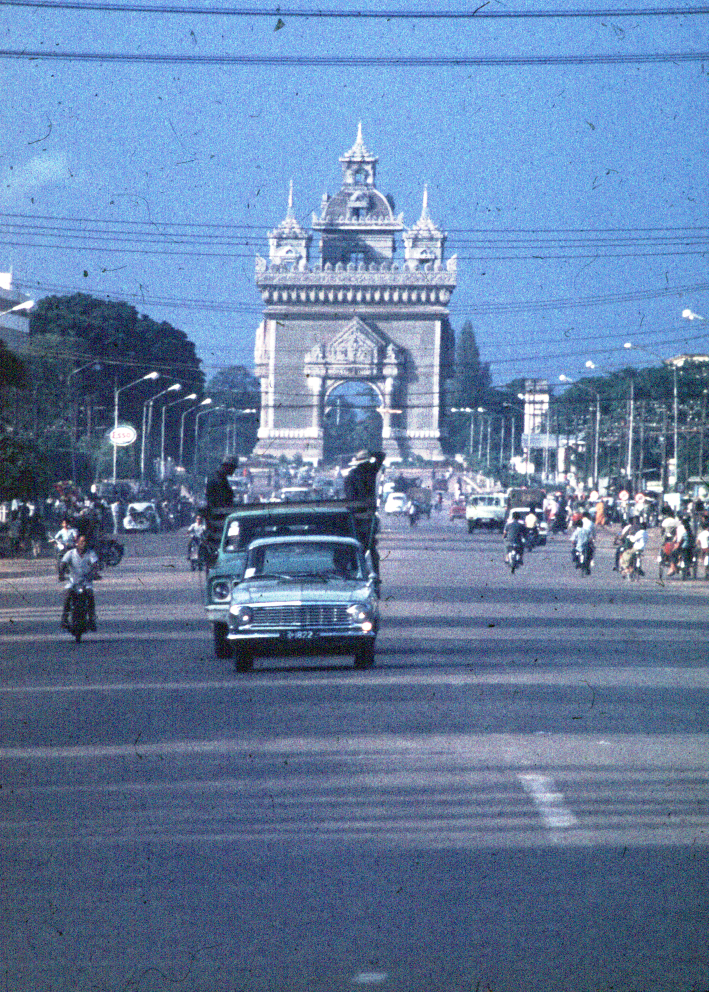
Ave Lane Xang and Monument Vientiane 1969
Traffic on the broad Ave Lane Xang was sparse in 1969 but the Monument has changed little, looking splendid in the morning sun.

Typical Lao Meal Vientiane 1969
Bean sprouts, sticky rice and green vegetables together with spicey soup, followed by bananas or other fruit

Typical Lao house in Vientiane suburbs 1969
Lao people traditionally lived in bamboo houses built on stilts to avoid being flooded. Animals lived underneath and fed off the scraps of food.

Vietnamese boat crew Vientiane 1969
This South Vietnam boat crew prepare for their race in this annual event

Boat Races on the Mekong Vientiane 1969
A very popular attraction in October were the annual Mekong boat races

Vietnamese Boat Racers Vientiane 1969
Various groups entered their boat for this popular annual contest. Our Lao-English club boat sank but we walked to the finish.

Mekong River in Dry Season Vientiane 1969
An enormous sandbank in the Mekong outside Vientiane appeared every dry season

Rocket on Truck Vientiane 1969
These massive 10m rockets, built by the monks, are paraded around town before being taken to launch site

Rocket Launched on river bed Vientiane 1969
The annual Boun Bang Fai (Rocket Festival) is held every May and is intended to bring the rain.

Rocket Smoke from launch pad Vientiane 1969
Four rockets are placed on launch pad together after being duly prepared. About 60% launch successfully. Some take minutes after ignition before suddenly lifting off across the Mekong.

Rocket Festival children watching Vientiane 1972
Crowds thronged along the river bank to watch the spectacle, including many children

Ox cart in Vientiane 1969
Ox carts were frequently seen in the streets of Vientiane in 1969, their giant wheels coping well with potholes.

That Luang Monks collecting 1969
Inside the stupa complex monks with bowls collect alms from the waiting women

Hmong Chief Vientiane 1969
Panya Touby Lyfoung was considered head of the Hmong in Laos and served in Lao government until 1975 when he was exiled.

Aerial view of Monument Vientiane 1969
View of the Monument at the top of Ave Lane Xang depicts its position opposite the Laos National Assembly (r). The Annusaveri as it was known locally was rumoured to have been built of foreign aid cement.
In the late months of 1969, Sam Neua produced a striking range of political texts that together reveal the full rhetorical spectrum of the revolutionary camp: from the Laotian Patriotic Front’s sharp denunciation of Souvanna Phouma’s appearance at the United Nations, portraying the Vientiane administration as an illegitimate creation of U.S. influence, to the Laotian Patriotic Neutralist Forces’ solemn message of condolence following the death of Ho Chi Minh. It finally gave a more expansive ideological tribute that framed Ho Chi Minh’s life as a model of revolutionary virtue, internationalism, and unity. Read together, these documents show how accusation, mourning, and doctrinal instruction coexisted in Sam Neua’s political messaging during a pivotal moment in the region’s history.
Below is teletype printout received at Lao National Radio in late 1969:

Lao Communist statement on death of Ho Chi Minh Sam Neua 1969
Lao Radio monitored Khao San Pathet Lao – the news division of the Lao Communist movement based in Sam Neua.

Ho Chi Minh’s Example Praised Sam Neua 1969
A second teletype message from KPL praising the example set by recently deceased Ho Chi Minh of North Vietnam

KPL Critique of Souvanna Phouma Sam Neua 1969
The first page of a long tirade of criticism directed toward the Royal Lao Government following PM’s visit to UN General Assembly